
Cavalier Eggshell by Homer Laughlin | Vintage American Dinnerware
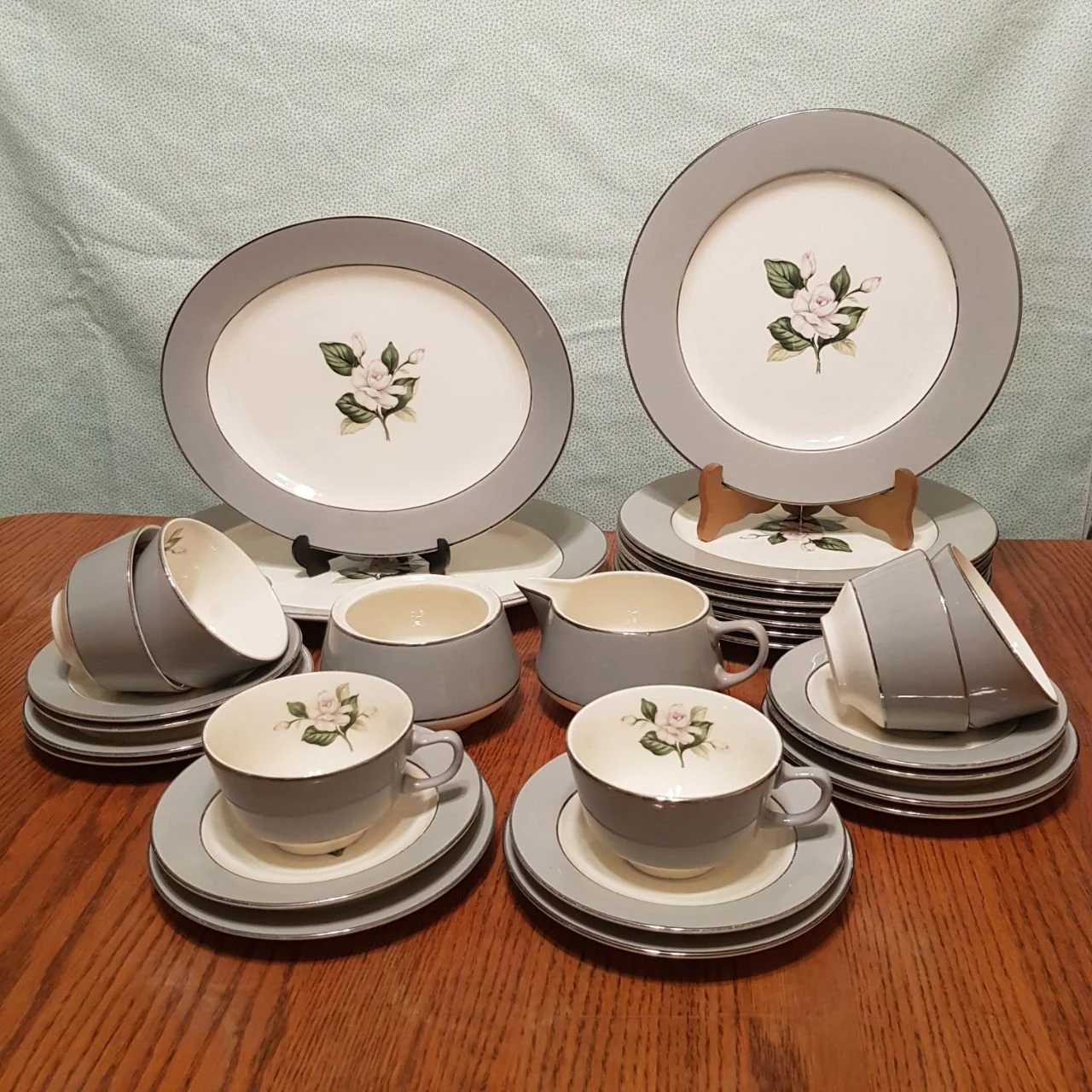
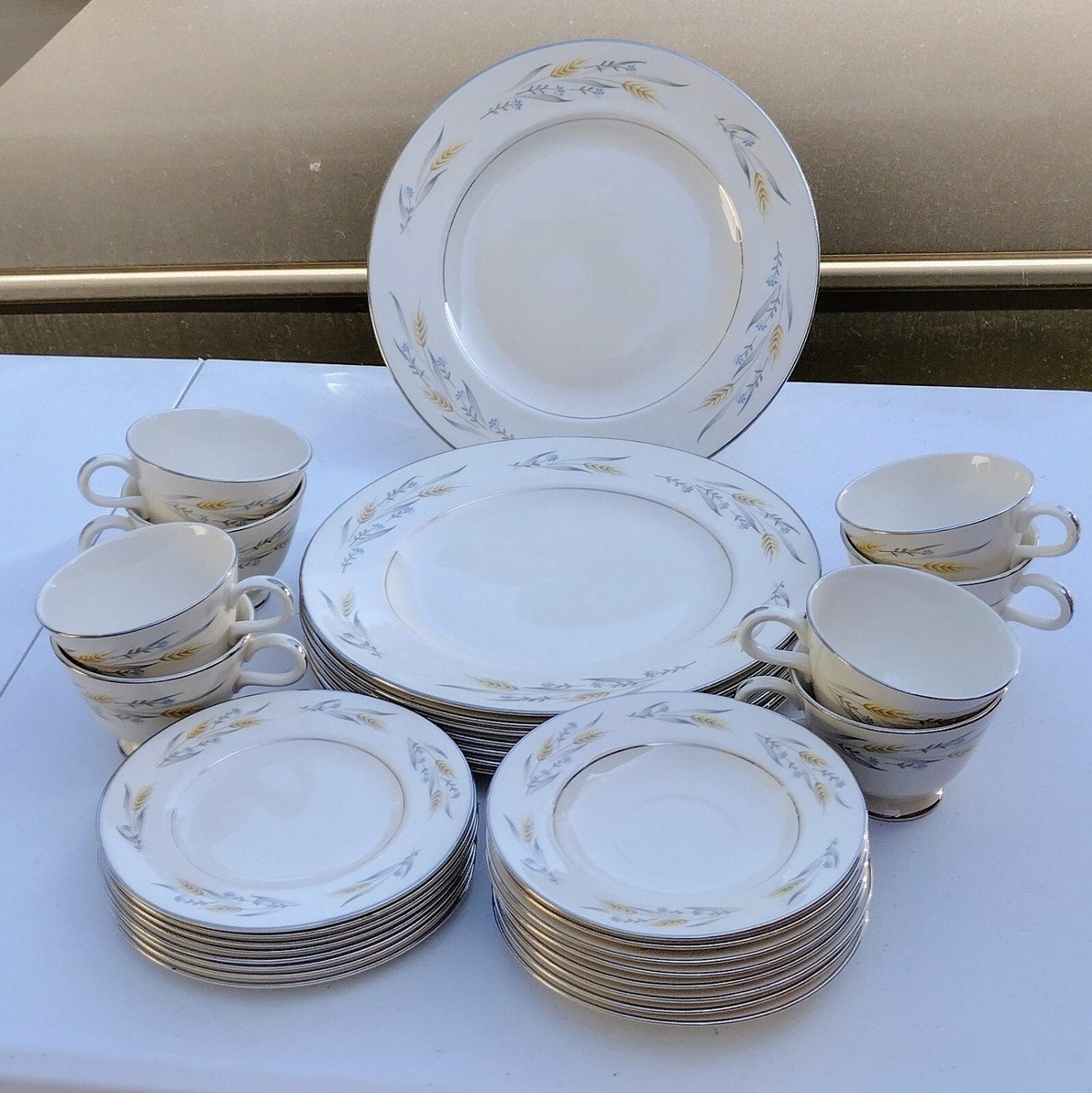
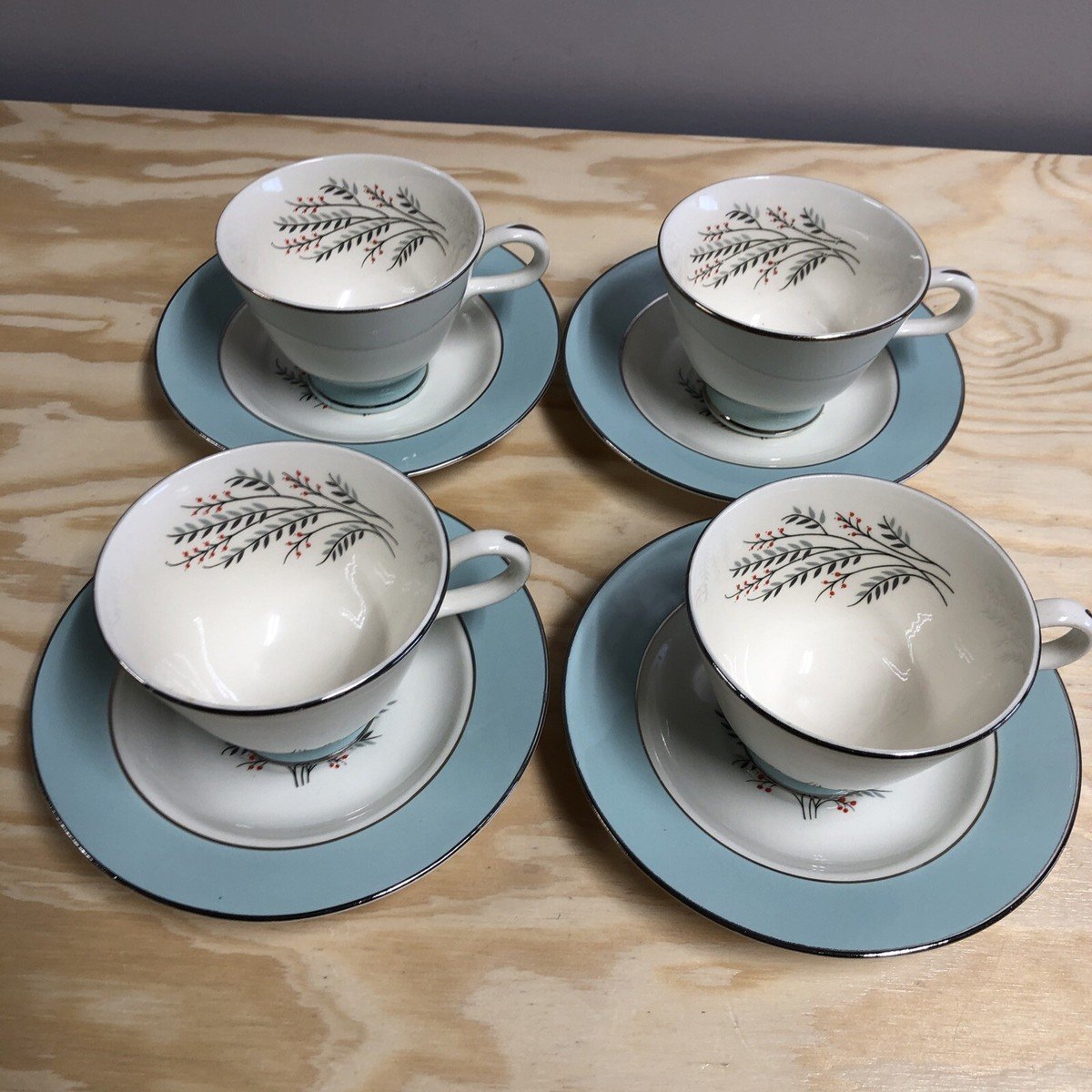
Our Cavalier Eggshell pattern represents one of Homer Laughlin’s most beloved mid-century dinnerware lines. Introduced in the 1950s, this collection showcases our signature eggshell body — lighter and more refined than standard restaurant ware, yet durable enough for daily use.
The Cavalier shape features a distinctive embossed scroll border that frames each piece with subtle elegance. We designed this pattern for American families who wanted something more graceful than utility ware but still practical for everyday meals. The eggshell body was a technological achievement for us at the time: thinner walls that remained chip-resistant, with a warm ivory tone that complemented any table setting.
Whether you’re replacing a treasured piece from your grandmother’s set or starting your own collection of vintage American china, Cavalier Eggshell offers the perfect balance of nostalgia and function.
What makes Cavalier Eggshell special
The Eggshell Body: Homer Laughlin’s Mid-Century Innovation
We developed our eggshell body in the late 1940s as a lighter alternative to our heavier hotel china. The name comes from the delicate, thin-walled construction that mimics the strength-to-weight ratio of an actual eggshell.
Cavalier eggshell pieces typically measure 20-30% thinner than our standard restaurant ware from the same era. This wasn’t just about reducing weight — the eggshell body allowed us to achieve a warmer, creamier tone that resonated with postwar American homemakers looking for elegance without formality.
Identifying Authentic Cavalier Eggshell Pieces
Backstamp Details
Genuine Homer Laughlin Cavalier Eggshell bears our company backstamp on the underside of each piece. Look for “Cavalier” printed in script, often accompanied by “Eggshell” and “Homer Laughlin, USA.” Some pieces also carry a date code — our factory used a letter-number system where the letter indicates the month and the number indicates the year within a decade.
The Embossed Border
The defining feature of Cavalier is the raised scroll pattern that runs along the rim of plates and the upper edge of hollowware. This embossing was applied to the greenware before glazing, so it’s part of the body itself — not a surface decoration that can wear away. Run your finger along the border: you should feel the gentle relief of the scrollwork even under the glaze.
Building and Completing Your Set
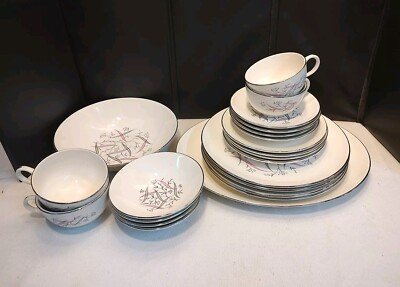
We originally offered Cavalier Eggshell in full place settings that included dinner plates, salad plates, bread-and-butter plates, cups, saucers, fruit bowls, and soup bowls. Serving pieces included platters in multiple sizes, vegetable bowls, a gravy boat with attached underplate, a covered sugar bowl, and a creamer.
Many collectors start with place settings for four or eight, then add serving pieces as they find them. Because production spanned more than a decade, slight variations in ivory tone can occur between early and late pieces — this is normal and part of the vintage charm. The embossed border pattern remained consistent throughout production, making pieces from different years compatible at the same table.
Discover More Vintage Homer Laughlin Collections



Rated 4.8 by verified buyers
Common Questions About Cavalier Eggshell
Eggshell refers to the lightweight, thin-walled ceramic body we developed in the late 1940s. Like an actual eggshell, the china has thin walls that are surprisingly strong when properly fired. Cavalier Eggshell pieces are 20-30% thinner than our standard restaurant ware from the same era, with a warm ivory tone and a bright, clear ring when gently tapped. The eggshell body allowed us to create elegant dinnerware that was lighter to handle and ship while maintaining the durability Homer Laughlin was known for.
Genuine Cavalier Eggshell carries our backstamp on the underside, typically showing ‘Cavalier’ in script along with ‘Eggshell’ and ‘Homer Laughlin, USA.’ Many pieces also include a date code with a letter for the month and number for the year. The embossed scroll border should be raised relief you can feel under the glaze, not a painted-on pattern. The body should have a warm ivory tone, not stark white, and should ring clearly when tapped. If you’re evaluating a potential purchase, ask for photos of the backstamp and check that the embossing is crisp and even.
Cavalier Eggshell is safe for food use. Our mid-century glazes were lead-free and meet modern safety standards. The vitrified body is non-porous and resists staining and bacteria. We recommend hand-washing for heirloom pieces, though gentle dishwasher cycles are safe. Avoid sudden temperature changes and don’t use pieces with chips or cracks for serving food. If a piece shows extensive crazing, consider using it for display rather than daily service with acidic foods, as crazing can make the glaze slightly more porous over time.
A standard place setting included a dinner plate, salad plate, bread-and-butter plate, cup, saucer, fruit bowl, and soup bowl. Serving pieces included platters in 11-inch, 13-inch, and 15-inch sizes, round and oval vegetable bowls, a gravy boat with attached underplate, covered sugar bowl, creamer, and sometimes a covered casserole. We also produced specialty items like egg cups and relish trays in limited quantities. Not every household purchased every piece — many families started with basic place settings and added serving pieces over time.
Yes, Cavalier Eggshell coordinates beautifully with other Homer Laughlin eggshell body patterns from the 1950s and 1960s. The warm ivory tone pairs especially well with solid-color glazes from our Rhythm and Swing shapes. Some collectors mix Cavalier with Virginia Rose, another embossed pattern on eggshell, or use Cavalier as neutral base pieces with brighter accent plates from Fiesta or Harlequin. The key is matching body weight and scale — eggshell pieces look best with other eggshell or similarly delicate china rather than heavy restaurant ware.
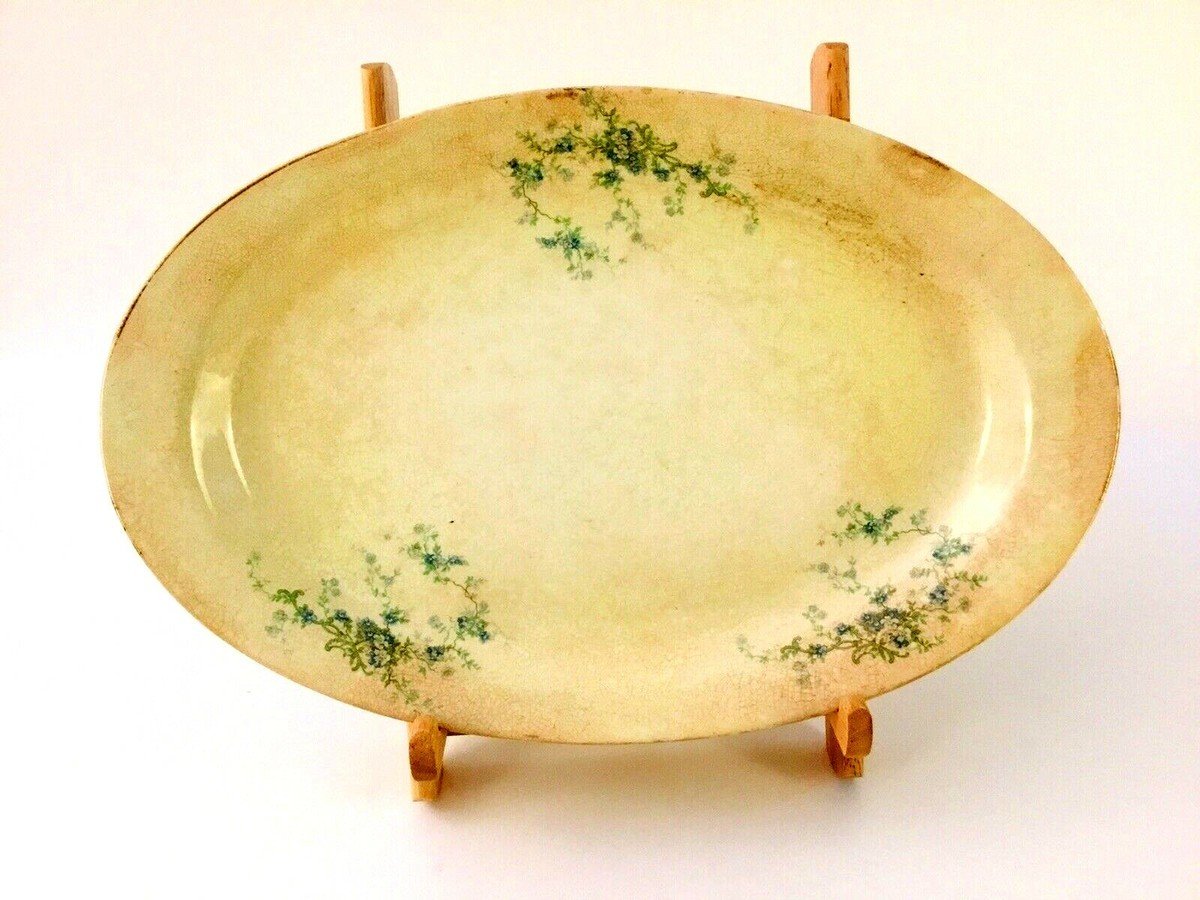
Those fine hairline cracks are called crazing, and they’re common in vintage china. Crazing occurs when the glaze and the clay body expand and contract at slightly different rates over decades of temperature changes. It doesn’t mean the piece is damaged or unsafe — it’s a natural aging characteristic of ceramic glazes. Crazing doesn’t affect structural integrity, though it can make the glaze slightly more porous. If crazing bothers you aesthetically, look for pieces that were stored carefully in climate-controlled conditions. Many collectors embrace crazing as part of a piece’s history and character.
We produced Cavalier Eggshell primarily through the 1950s and into the late 1960s. Production ceased as we shifted focus to newer shapes and as the market moved toward brighter colors and bolder patterns in the late 1960s and 1970s. The exact end date varied by piece — some serving items were discontinued earlier than basic place settings. Today, Cavalier Eggshell is a collectible vintage pattern. We no longer produce it, but complete sets and individual pieces remain available through vintage dealers, estate sales, and online marketplaces.