
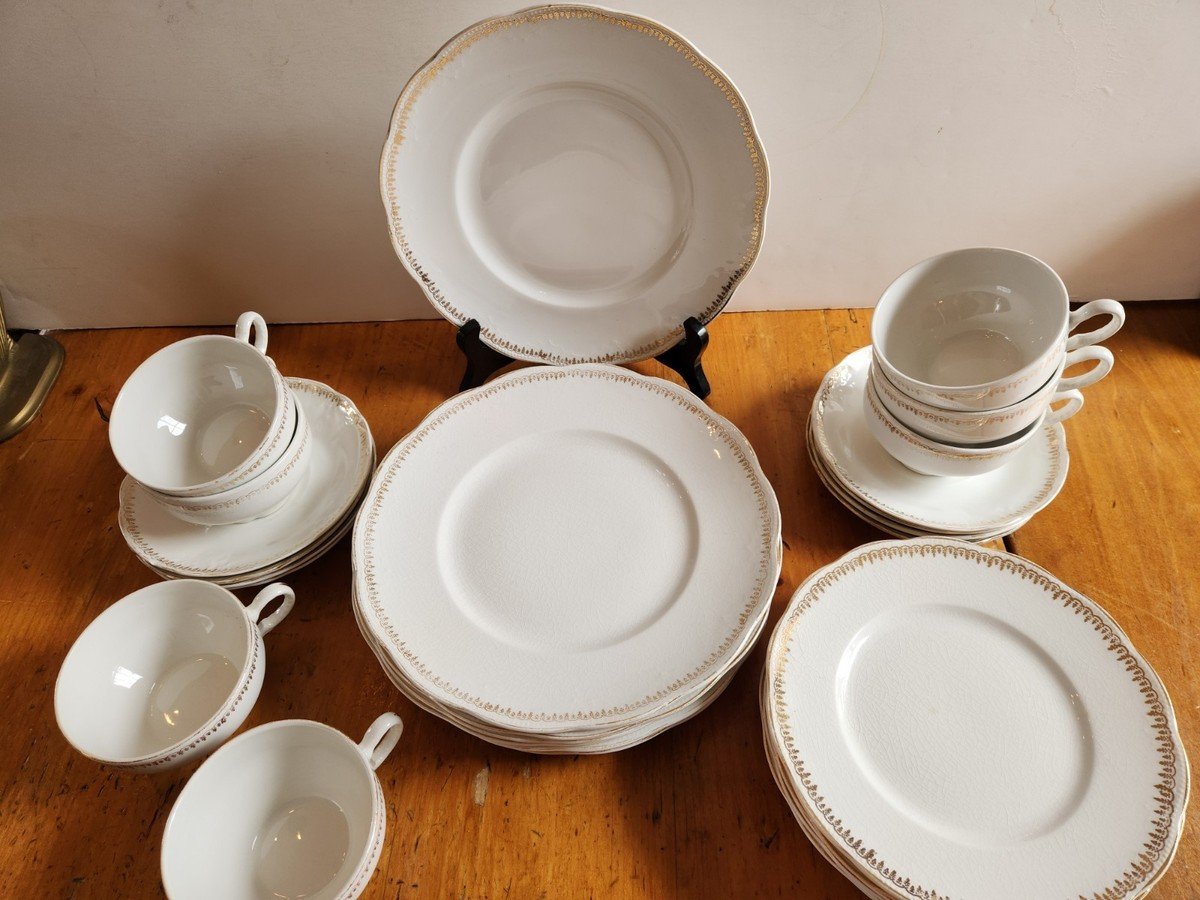
The Angelus by Homer Laughlin | Classic Art Deco China Pattern
Homer Laughlin The Angelus captures the refined geometry of the Art Deco era with deeply embossed panels and a brilliant white glaze that amplifies light across every piece. Originally introduced in the 1930s, this pattern reflects our commitment to combining aesthetic ambition with the durability restaurant owners and home collectors demand.
We designed The Angelus for daily use—its robust body withstands the rigors of commercial dishwashers and high-volume service while maintaining the delicate visual rhythm that makes each place setting feel special. The embossed relief creates subtle shadow play that shifts with ambient light, giving every table a dynamic, sculptural presence without relying on applied color or gilding that can fade over time.
Pattern details & construction
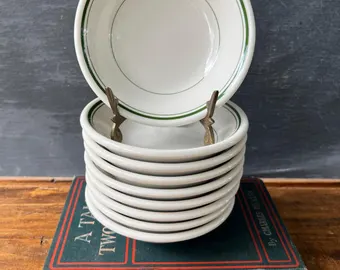
Vitrified China Body & Glaze Chemistry
The Angelus is crafted from our proprietary vitrified china formula—a high-fired ceramic body that achieves glass-like density during the firing process. We fire every piece to cone 6 (approximately 2232°F), which fuses the clay particles so completely that the finished china absorbs less than half a percent of its weight in moisture.
This vitrification gives The Angelus exceptional resistance to thermal shock, meaning you can move a plate directly from refrigerator to microwave to dishwasher without risking hairline cracks. The brilliant white glaze we apply before the final firing contains no lead and creates a non-porous surface that resists staining from acidic foods, coffee, and tea. Unlike earthenware or low-fire ceramics, vitrified china maintains its original luster even after years of daily use.
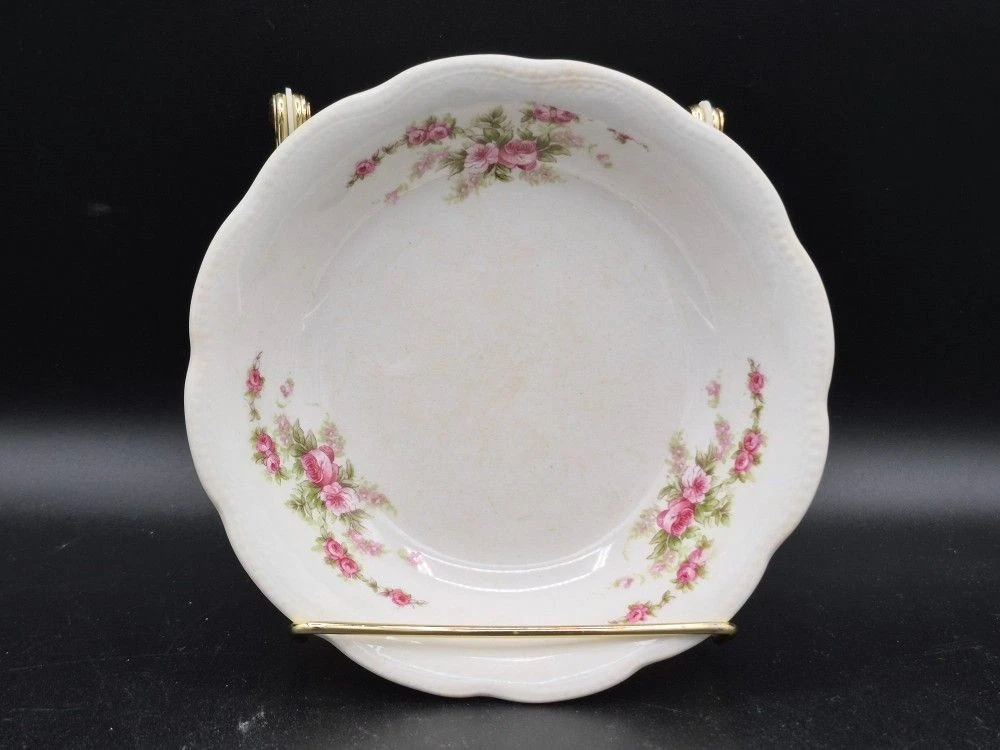
Art Deco Design Language & Historical Context
We introduced The Angelus during the height of the Art Deco movement, when designers across industries embraced geometric abstraction, streamlined forms, and the interplay of light and shadow. The pattern’s embossed panels echo the stepped facades of skyscrapers, the radiating motifs found in Deco metalwork, and the linear elegance that defined the era’s aesthetic vocabulary.
Rather than relying on hand-painted decoration or decals that can fade, The Angelus achieves its visual impact through pure form. The embossed relief catches light at different angles throughout a meal, creating a subtle animation that changes as diners shift their position at the table. This three-dimensional approach to pattern design was technically challenging to execute in vitrified china—the deep relief required precise mold engineering and careful control of shrinkage rates during firing.
Commercial Durability Standards & Testing
The Angelus meets ASTM C1404 standards for vitrified china used in foodservice environments, a specification that requires the body to withstand repeated thermal cycling, resist impact damage, and maintain glaze integrity after thousands of dishwasher cycles. We subject every production batch to our internal testing protocol, which exceeds industry minimums.
Each piece undergoes edge-impact testing to verify the rolled rim’s resistance to chipping—a critical durability factor for stacked storage and high-volume service. The vitrified body absorbs minimal moisture, preventing the internal stress that causes cracking when ceramic ware experiences rapid temperature changes. This makes The Angelus suitable for oven-to-table service up to 450°F, a capability rare in decorative china patterns.
More vintage-inspired patterns from our archive collection


Rated 4.8 by verified buyers
Questions about The Angelus pattern and care
The Angelus is part of our archive collection and availability varies based on production runs at our Newell facility. We periodically manufacture batches to meet collector and commercial demand. Contact our customer service team for current inventory on specific pieces, or check with authorized dealers who may have existing stock.
Because we retain the original molds and glaze formulas, pieces produced today are identical to those made in the 1930s. This means you can add to an inherited set or replace a damaged piece with confidence that the new china will match seamlessly.
The Angelus is oven-safe up to 450°F in conventional and convection ovens, making it suitable for baking casseroles, warming dinner plates, and oven-to-table service. Avoid direct exposure to broiler elements, as concentrated radiant heat can cause thermal shock in any ceramic ware.
For broiler use, keep pieces at least six inches from the heating element and preheat the china gradually by placing it in a cold oven before turning on the broiler. This precaution applies to all vitrified china, not just The Angelus.
For stains in the embossed valleys—common with tomato-based sauces or strong coffee—make a paste of baking soda and water and apply it with a soft-bristled brush. Let the paste sit for five minutes, then scrub gently along the relief pattern. Rinse thoroughly with hot water.
Barkeeper’s Friend or other oxalic acid cleansers also work well on persistent stains without damaging the glaze. The non-porous surface of vitrified china means stains sit on top rather than penetrating, so they respond to mild abrasives that would damage softer ceramics.
All Homer Laughlin china produced since the 1970s uses lead-free and cadmium-free glazes that meet FDA standards for food-contact surfaces. The Angelus glaze formulation contains no heavy metals and is safe for all food types, including acidic dishes that can leach contaminants from vintage ceramics.
If you own pre-1970s pieces of The Angelus, we recommend testing them with a lead-detection kit available at hardware stores, as older production may have used lead-based glazes common in that era.
Vitrified china and porcelain both achieve a glass-like density through high-temperature firing, but vitrified china uses a slightly different clay body formulation optimized for durability rather than translucency. Porcelain is typically thinner and allows light to pass through, while vitrified china prioritizes impact resistance and thermal shock tolerance.
The Angelus represents commercial-grade vitrified china—thicker and more robust than fine porcelain, with rolled edges and a body composition designed to withstand decades of daily use in demanding environments. Both materials are fully vitreous and non-porous.
The Angelus pairs beautifully with other white patterns because the embossed relief provides visual interest without competing color or applied decoration. Many collectors mix it with Fiesta White, plain coupe shapes, or other embossed patterns to create layered place settings with varied textures.
When mixing patterns, ensure all pieces share similar durability standards if you plan to wash them together. The Angelus can handle commercial dishwasher cycles, so avoid pairing it with delicate hand-painted china that requires gentler care unless you’re willing to hand-wash the entire set.
We recommend eight to twelve place settings for a household of four to allow for breakage, dishwasher loads, and entertaining. With eight settings you can host a dinner party while having a few pieces in the dishwasher from breakfast. Twelve settings provide even more flexibility and are standard for formal entertaining.
Consider adding extra serving pieces beyond the basic place settings—a second platter, an additional covered casserole, and extra bowls for family-style service. The Angelus serving pieces are commercial-grade and can handle the weight of holiday roasts or large pasta dishes without flexing.