
Fiesta Cracked in the Dishwasher? Here's the Real Fix for Homer Laughlin Owners
If you’ve ever pulled a Fiesta plate or bowl out of the dishwasher only to find a hairline crack that wasn’t there before, you’re not alone. We hear this question constantly: did the dishwasher break my Fiesta? The short answer is that dishwashers don’t crack vitrified china on their own, but the way you load and use them absolutely can.
Fiesta is fully vitrified china, fired at over 2,000°F, which makes it technically dishwasher-safe. But dishwasher-safe doesn’t mean immune to thermal shock, hard-water etching, or the impact stress that happens when pieces knock together during a cycle. In this guide, we’ll walk through the real Fiesta dishwasher cracking fix—what causes the problem, how to prevent it, and what to do if your pieces are already damaged.
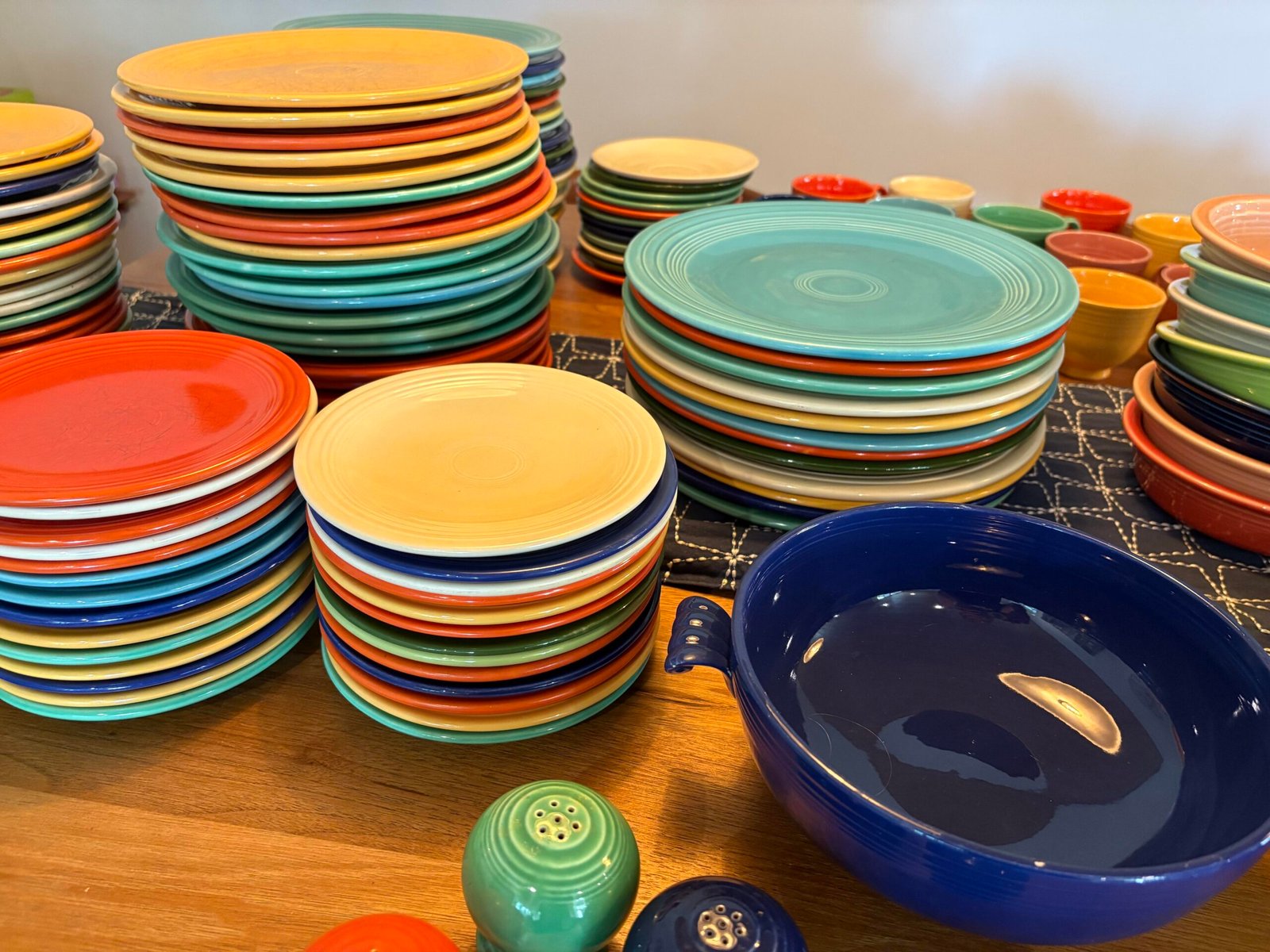
Why Fiesta Cracks in the Dishwasher: Thermal Shock vs Impact Stress
Most cracks that appear after a dishwasher cycle aren’t caused by the detergent or the water itself—they’re caused by sudden temperature changes or physical impact. Thermal shock happens when a cold plate hits scalding rinse water, or when a hot piece is removed mid-cycle and placed on a cold counter. Vitrified china can handle high heat, but it doesn’t love abrupt swings.
Impact stress is the other culprit. If your Fiesta bowls or mugs are stacked too tightly, or if a heavy pot shifts during the wash and knocks a plate, the force can create micro-fractures that grow into visible cracks over time. This is especially common with thinner shapes like saucers and salad plates. Our eggshell body construction balances strength and weight, but no china is indestructible when it’s rattling around in a crowded rack.
The Loading Method That Actually Prevents Cracks
Most dishwasher damage is preventable if you load Fiesta the right way. Start by spacing pieces at least a quarter-inch apart—enough room that they won’t touch if the rack shifts. Place plates and bowls in the lower rack facing the center, and never nest bowls inside each other unless you’re hand-washing. Mugs and cups belong on the top rack, handles facing inward so they don’t catch on the spray arm.
Avoid overloading. If you have to force a piece into place, or if two items are touching when the door closes, pull one out and wait for the next cycle. The few extra minutes are worth it when you’re protecting a complete set. We also recommend skipping the heated dry setting—let the pieces air-dry instead, which eliminates the risk of thermal shock when you open the door.
Hard Water and Detergent Build-Up: The Hidden Crack Accelerators
Hard water doesn’t crack Fiesta on its own, but it does leave mineral deposits that weaken the glaze over time. If you see a white film or cloudy residue on your plates, that’s a sign your water is too hard for standard detergent alone. The minerals create tiny rough spots on the glaze surface, and those spots become stress points where cracks can start.
Switch to a dishwasher detergent designed for hard water, or add a rinse aid to every cycle. If you already have build-up, soak the affected pieces in a 1:1 mix of white vinegar and warm water for 20 minutes, then scrub gently with a non-abrasive sponge. The glaze itself won’t dissolve, but the mineral layer will. For lighter everyday pieces—including our china coffee cups—this simple soak can extend their dishwasher life by years.

What to Do If Your Fiesta Is Already Cracked
If a piece has already cracked, the first step is to decide whether it’s still usable. Hairline cracks that don’t go all the way through the body are usually cosmetic—they won’t leak, and they won’t worsen if you stop the behavior that caused them. But if the crack is deep enough to catch your fingernail, or if it runs across a stressed area like a bowl rim or mug handle, retire the piece from daily use.
You can’t reverse a crack in vitrified china. Glues and epoxies aren’t food-safe, and they don’t bond well to glazed surfaces anyway. If the piece holds sentimental value, consider repurposing it as a planter or a display item. If you’re missing a match now, we still produce most Fiesta colors, so replacing a single cracked plate or bowl is straightforward. Some collectors actually prefer the lived-in look of older pieces with minor crazing, but that’s a personal call.
Protect Your Fiesta with Smarter Dishwasher Habits
Most Fiesta cracks are preventable. Load with space, skip the heated dry, and watch for hard-water build-up. If a piece does crack, decide whether it’s cosmetic or structural, and replace it if needed.
We’ve been making Fiesta since 1936, and the modern formulation is genuinely built for everyday dishwasher use. But dishwasher-safe doesn’t mean careless-proof. Treat your pieces with the same care you’d give any well-made china, and they’ll last decades.
Common Questions About Fiesta Cracking and Dishwasher Care
Fiesta is genuinely dishwasher-safe. It’s fully vitrified china fired at over 2,000°F, which makes it non-porous and resistant to detergent, heat, and water. The issue isn’t whether it can survive a dishwasher cycle—it can—but whether you’re loading it carefully enough to avoid thermal shock and impact damage.
No. Food-safe epoxies don’t bond reliably to vitrified glaze, and non-food-safe glues aren’t safe for dinnerware. If the crack is purely cosmetic and doesn’t go through the body, you can keep using the piece. If it’s structural, it’s time to replace it.
Vintage Fiesta from the 1930s–1970s was made with lead-based glazes in some colors, and we don’t recommend putting those pieces in the dishwasher at all. Modern Fiesta (post-1986) is lead-free and dishwasher-safe, so the loading and temperature tips in this guide apply. If you’re not sure which era your piece is from, hand-wash it to be safe.
Mugs have handles, and handles are stress points. When a mug knocks into another dish during the wash cycle, the force travels through the handle joint, which is where most cracks start. Top-rack placement and extra spacing help, but mugs are always more vulnerable than flat plates.
Yes, in most cases. The heated dry cycle raises the internal temperature of the dishwasher cavity by 30–40°F, and when you open the door, cold air rushes in. That temperature swing is a classic thermal shock scenario. Air-drying eliminates the spike and gives your Fiesta a gentler cool-down.
Fiesta and our other china lines—including Harlequin—are all vitrified at similar temperatures, so they share the same core durability. The difference is usually in shape and glaze thickness. Fiesta’s rounded rims and thicker glaze give it a slight edge in impact resistance, but all our dinnerware benefits from careful dishwasher loading.